Firefighter Service Business: Trade Publication

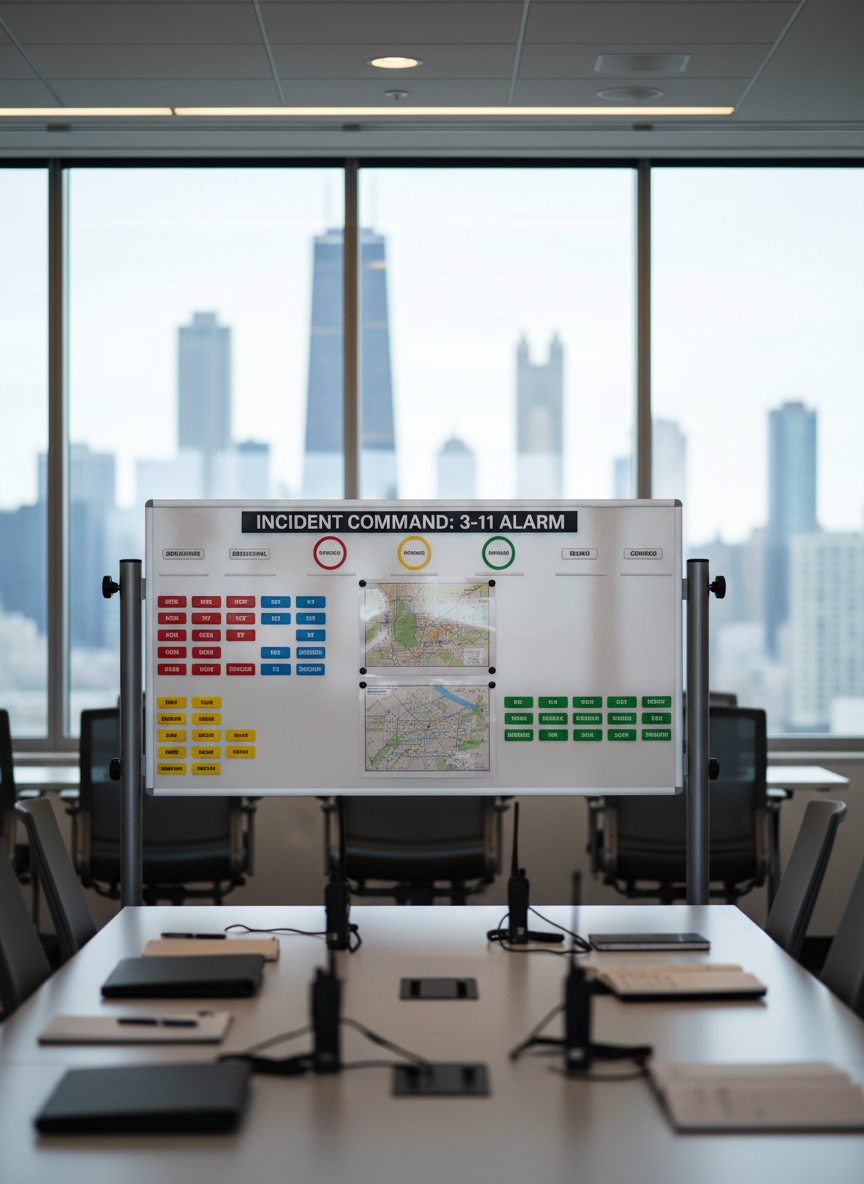
A meticulously organized firefighter incident command board made of glossy white metal, covered with color-coded magnetic tags, status indicators, and neatly arranged map overlays of a Chicago neighborhood. The board stands on sturdy metal legs in a modern fire station conference room, with Chicago skyline silhouettes faintly visible through large windows. Cool daylight from the windows combines with recessed ceiling lights, creating a clean, professional glow and soft reflections on the board’s surface. Photographic realism at eye level, with sharp focus on the board and a subtle bokeh on surrounding chairs, laptops, and radios. The mood is analytical and focused, emphasizing strategic management and decision-making in a contemporary urban fire service environment.

About Us

Trade insights and analysis for Chicago fire chiefs, officers, and staff managing modern department operations.

About

We provide Chicago fire service leaders with clear, unbiased coverage of budgets, grants, staffing, equipment, technology, and leadership, guided by verified data, local expertise, and practical field insight to support better operational and strategic decisions.

A long, light-wood conference table in a Chicago fire department headquarters, covered with open budget binders, neatly stacked grant applications, a rugged laptop displaying bar charts, and a detailed map of city districts with colored pins. Beyond the table, large windows reveal an out-of-focus hint of the Chicago skyline and a nearby firehouse tower. Soft afternoon daylight streams in, complemented by warm overhead pendants that cast gentle, elongated shadows across the paperwork. Photographic realism from a slightly elevated angle, with a shallow depth of field that keeps the central documents crisp. The mood is serious yet collaborative, underscoring financial planning, grant strategy, and resource allocation in urban fire service management.

Editorial Team

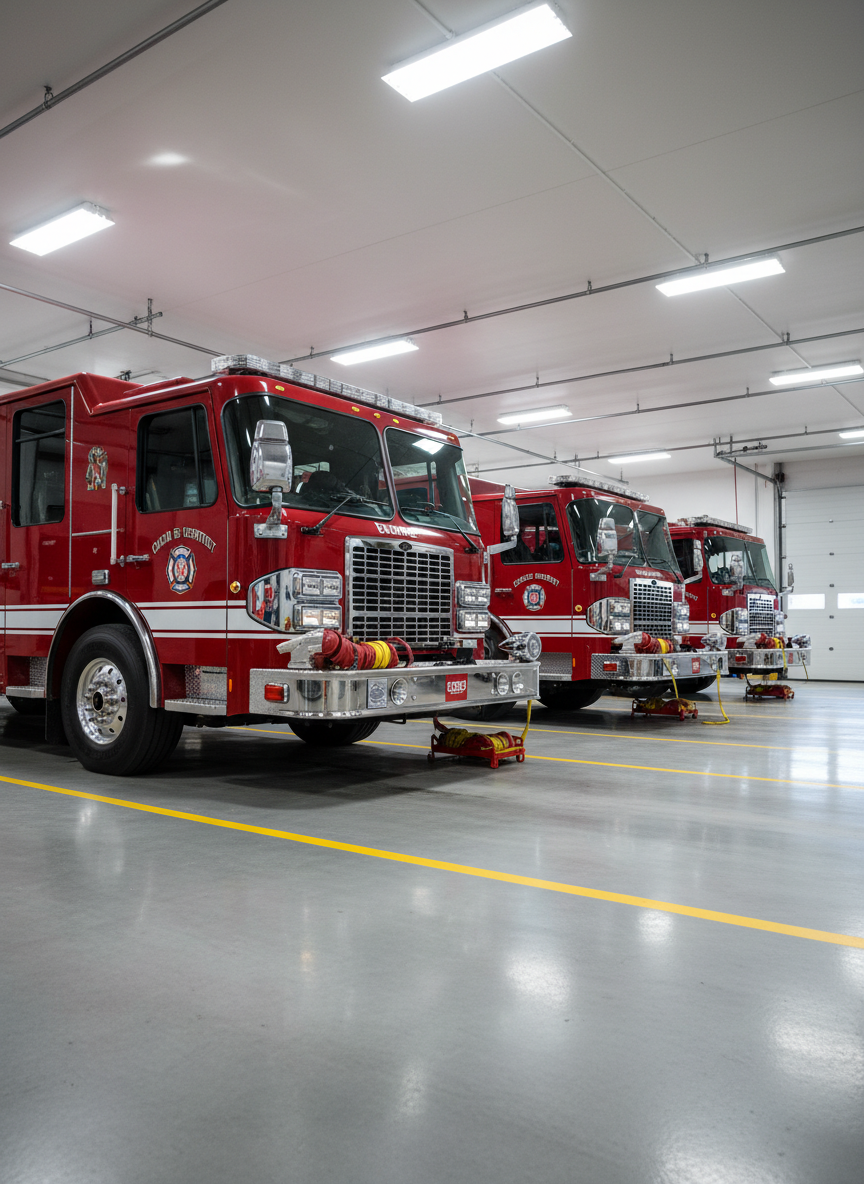
A row of gleaming, modern fire engines in Chicago livery, tightly parked inside a spotless apparatus bay, emphasizing their front grills, hose connections, and polished chrome hardware. The bay’s smooth concrete floor reflects the vehicles alongside yellow safety striping and neatly coiled supply lines. Overhead, industrial LED lighting creates even, bright illumination, producing crisp highlights along the trucks’ red paint and subtle shadows beneath the wheels. Shot from a slightly low angle in photographic realism to convey scale and readiness, with sharp depth throughout. The atmosphere is orderly and professional, suggesting disciplined fleet management, capital investment, and careful stewardship of department equipment and budgets in a major city department.

Aarav Sharma

A meticulously organized firefighter incident command board made of glossy white metal, covered with color-coded magnetic tags, status indicators, and neatly arranged map overlays of a Chicago neighborhood. The board stands on sturdy metal legs in a modern fire station conference room, with Chicago skyline silhouettes faintly visible through large windows. Cool daylight from the windows combines with recessed ceiling lights, creating a clean, professional glow and soft reflections on the board’s surface. Photographic realism at eye level, with sharp focus on the board and a subtle bokeh on surrounding chairs, laptops, and radios. The mood is analytical and focused, emphasizing strategic management and decision-making in a contemporary urban fire service environment.

Mateo García

A long, light-wood conference table in a Chicago fire department headquarters, covered with open budget binders, neatly stacked grant applications, a rugged laptop displaying bar charts, and a detailed map of city districts with colored pins. Beyond the table, large windows reveal an out-of-focus hint of the Chicago skyline and a nearby firehouse tower. Soft afternoon daylight streams in, complemented by warm overhead pendants that cast gentle, elongated shadows across the paperwork. Photographic realism from a slightly elevated angle, with a shallow depth of field that keeps the central documents crisp. The mood is serious yet collaborative, underscoring financial planning, grant strategy, and resource allocation in urban fire service management.

Zuri Ndlovu

A row of gleaming, modern fire engines in Chicago livery, tightly parked inside a spotless apparatus bay, emphasizing their front grills, hose connections, and polished chrome hardware. The bay’s smooth concrete floor reflects the vehicles alongside yellow safety striping and neatly coiled supply lines. Overhead, industrial LED lighting creates even, bright illumination, producing crisp highlights along the trucks’ red paint and subtle shadows beneath the wheels. Shot from a slightly low angle in photographic realism to convey scale and readiness, with sharp depth throughout. The atmosphere is orderly and professional, suggesting disciplined fleet management, capital investment, and careful stewardship of department equipment and budgets in a major city department.

Leila Haddad

A meticulously organized firefighter incident command board made of glossy white metal, covered with color-coded magnetic tags, status indicators, and neatly arranged map overlays of a Chicago neighborhood. The board stands on sturdy metal legs in a modern fire station conference room, with Chicago skyline silhouettes faintly visible through large windows. Cool daylight from the windows combines with recessed ceiling lights, creating a clean, professional glow and soft reflections on the board’s surface. Photographic realism at eye level, with sharp focus on the board and a subtle bokeh on surrounding chairs, laptops, and radios. The mood is analytical and focused, emphasizing strategic management and decision-making in a contemporary urban fire service environment.

Hiroshi Tanaka

A long, light-wood conference table in a Chicago fire department headquarters, covered with open budget binders, neatly stacked grant applications, a rugged laptop displaying bar charts, and a detailed map of city districts with colored pins. Beyond the table, large windows reveal an out-of-focus hint of the Chicago skyline and a nearby firehouse tower. Soft afternoon daylight streams in, complemented by warm overhead pendants that cast gentle, elongated shadows across the paperwork. Photographic realism from a slightly elevated angle, with a shallow depth of field that keeps the central documents crisp. The mood is serious yet collaborative, underscoring financial planning, grant strategy, and resource allocation in urban fire service management.

Amara Okafor

A row of gleaming, modern fire engines in Chicago livery, tightly parked inside a spotless apparatus bay, emphasizing their front grills, hose connections, and polished chrome hardware. The bay’s smooth concrete floor reflects the vehicles alongside yellow safety striping and neatly coiled supply lines. Overhead, industrial LED lighting creates even, bright illumination, producing crisp highlights along the trucks’ red paint and subtle shadows beneath the wheels. Shot from a slightly low angle in photographic realism to convey scale and readiness, with sharp depth throughout. The atmosphere is orderly and professional, suggesting disciplined fleet management, capital investment, and careful stewardship of department equipment and budgets in a major city department.

Soren Jensen

A meticulously organized firefighter incident command board made of glossy white metal, covered with color-coded magnetic tags, status indicators, and neatly arranged map overlays of a Chicago neighborhood. The board stands on sturdy metal legs in a modern fire station conference room, with Chicago skyline silhouettes faintly visible through large windows. Cool daylight from the windows combines with recessed ceiling lights, creating a clean, professional glow and soft reflections on the board’s surface. Photographic realism at eye level, with sharp focus on the board and a subtle bokeh on surrounding chairs, laptops, and radios. The mood is analytical and focused, emphasizing strategic management and decision-making in a contemporary urban fire service environment.

Nia Roberts

Visit us

Chicago

Hours

Monday–Friday, 9–5

Phone

(123) 456-7890